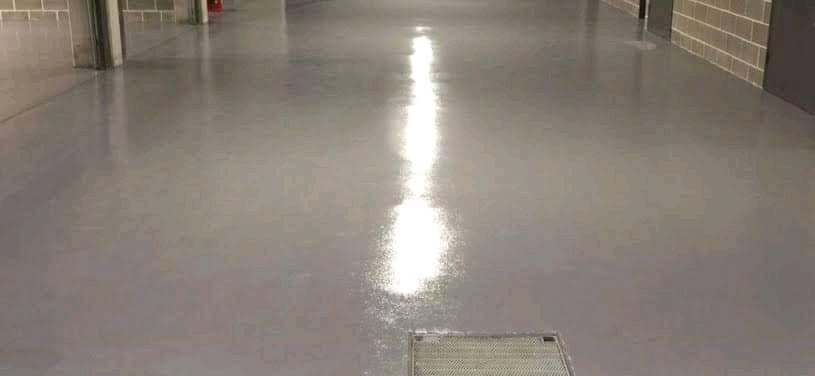
Epoxy pricing confuses people because the same words cover wildly different products. A thin film garage coating and a 6mm industrial screed are both called epoxy, and they are not remotely the same job.
This guide breaks down what epoxy flooring Cape Town buyers actually pay in 2026, and why two quotes for the same floor can differ by a factor of three.
Epoxy flooring Cape Town price ranges
Across South African suppliers in 2026, the ranges look like this:
- Entry level water-based, 1mm to 2mm: roughly R165 to R300 per square metre. Suited to light domestic use such as a garage floor.
- Solvent-based thin film coatings: roughly R200 to R300 per square metre.
- Heavier chemical-resistant systems, 3mm to 6mm: from around R385 upward, and well past R750 for demanding industrial specifications.
Taken together the market sits at about R165 at the bottom and R1,000 or more at the top. Where you land depends almost entirely on the system, not on the contractor.
Why the range is so wide
Four factors explain nearly all of the spread.
Thickness and system. A 1mm roll-on coating uses a fraction of the material of a 4mm self-levelling screed. Material cost scales with depth.
Substrate preparation. This is the part people underestimate. A sound, level slab needs a grind and a prime. A cracked, oily or previously painted slab needs mechanical preparation, crack repair and sometimes a levelling layer before any epoxy goes down.
Finish. Plain colour is cheapest. Flake and decorative quartz finishes cost more in material and take longer to lay.
Access and area. Small rooms cost more per square metre than large open floors, because setup and mixing time is the same either way.
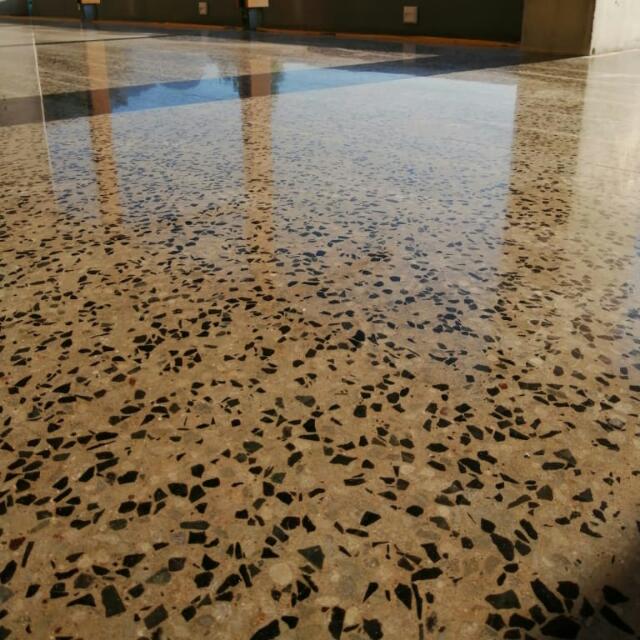
Preparation is where floors fail
If an epoxy floor lifts, peels or bubbles, the cause is almost always preparation rather than the epoxy itself.
Concrete has to be clean, sound and dry. Moisture rising through a slab with no damp proof membrane will push a coating off no matter how good the product is. Oil contamination in a garage or workshop does the same.
A quote that is dramatically cheaper than the others is usually skipping the grinding stage. That saving turns into a full re-do in two years.
Choosing the right system for the room
For a domestic garage that sees a car and a lawnmower, an entry level water-based coating is genuinely enough.
For a workshop with dropped tools, solvent spills and trolley traffic, step up to a thicker solvent-based or chemical-resistant build.
For kitchens, food premises and industrial floors, you want a heavy duty system with proper falls to drainage and coved edges where hygiene matters.
Buying more system than the room needs is wasted money. Buying less is a floor you replace early.
What to check in a quote
Ask for the system name, the total dry film thickness in millimetres, and exactly what preparation is included. Ask whether crack repair and any levelling compound are in the price or listed as provisional.
Also ask about cure and return-to-service time. Most floors take a day to walk on and considerably longer before heavy traffic or vehicles.
We install epoxy and self-levelling floors for residential, commercial and industrial clients around Cape Town. Quotations are free. Have a look at finished floors in our gallery, see the full services list, or get in touch for a site assessment.
Planning a bigger project? Our home renovation cost guide puts flooring in the context of a full renovation budget.
Where epoxy flooring Cape Town clients get the most value
Garages are the obvious win. Bare concrete dusts continuously, stains permanently and makes a dark space darker. A light coloured coating fixes all three for a few thousand rand on a standard double garage.
Workshops, storerooms and utility areas benefit for the same reasons, with the added advantage that spills wipe up instead of soaking in. In commercial premises the case is stronger still, because a sealed floor is faster to clean and meets hygiene requirements that bare concrete cannot.
Where epoxy is less compelling is a living area that would suit tiles or a screed better. We will say so rather than sell a system into the wrong room. Our services page covers the alternatives we install.
Living with an epoxy floor
Maintenance is mostly sweeping and mopping. Avoid harsh solvents, deal with oil spills reasonably promptly, and put felt pads under anything heavy that gets dragged.
The most common cause of damage we see is not wear but point loading, typically a jack stand or a heavy shelf leg on a thin domestic coating. If you know a floor will take that kind of load, specify a thicker system up front rather than repairing later.
Recoating is straightforward when the time comes. A sound existing floor can usually be scuffed and re-coated at a fraction of the original cost, which is far cheaper than the full replacement discussed in our renovation guide. You can see finished floors in the project gallery.
Frequently asked questions
How much does epoxy flooring cost per square metre in South Africa?
Entry level 1mm to 2mm water-based systems generally run R165 to R300 per square metre. Heavier 3mm to 6mm chemical-resistant systems start around R385 and can exceed R750 for industrial specifications.
How long does an epoxy floor last?
A correctly prepared domestic garage floor typically gives eight to ten years or more. Heavy duty industrial systems last longer. Poor preparation is what shortens the life, not the epoxy.
Can epoxy go over an old painted floor?
Not directly. Old coatings have to be mechanically removed by grinding or shot blasting, otherwise the new epoxy bonds to the old paint and lifts with it.
How long before I can use the floor?
Most systems are walkable after about 24 hours. Vehicle traffic and heavy loads usually need several days for a full chemical cure. Your installer should give exact times for the product used.
Is epoxy suitable for a damp floor?
Not without a moisture barrier. A slab with no damp proof membrane will push a coating off from underneath. Moisture should be tested before any system is quoted.